
 11 hours ago
1
11 hours ago
1

Donny Hathaway had already been expounding connected the splendors and indignities of American beingness by the clip helium got to the Troubadour successful West Hollywood successful the past week of August 1971.
A classically trained pianist with a declamatory dependable shaped by his years successful the church, Hathaway closed Side 1 of his 1970 debut with an archetypal called “Tryin’ Times” — “Maybe folks wouldn’t person to suffer,” helium sang, “if determination was much emotion for your brother” — and finished the LP with a stately rendition of Nina Simone’s “To Be Young, Gifted and Black.” Months aft the medium was released, helium dropped a joyousness weaponry of a vacation single, “This Christmas,” that unapologetically made abstraction for a Black acquisition successful the yuletide-industrial complex.

Donny Hathaway performs astatine Mister Kelly’s successful Chicago successful 1971.
(Val Mazzenga / Chicago Tribune / Tribune News Service via Getty Images)
Yet Hathaway captured thing indelibly American during his week of shows astatine the Troubadour, which were recorded (along with a aboriginal gig astatine New York’s Bitter End) for the singer’s classical “Live” medium that came retired successful February 1972. On an LP afloat of spine-tingling performances, the undeniable precocious constituent is Hathaway’s instrumentality connected Carole King’s “You’ve Got a Friend” — a clear-eyed if optimistic representation of resilience and taste exchange.
King — who’d made her sanction successful the 1960s arsenic fractional of a prolific Brill Building songwriting duo with her husband, Gerry Goffin — wrote “You’ve Got a Friend” aft leaving Goffin and moving to Los Angeles with her 2 young daughters. Here she remade herself arsenic a low-key singer-songwriter dispensing omniscient yet unflashy tunes astir love, location and household — portion of a gentle resetting of pop’s temper aft the turmoil of the erstwhile decade.
Cut similar the remainder of the medium astatine A&M Studios connected La Brea Avenue, “You’ve Got a Friend” helped thrust King’s 1971 “Tapestry” LP to income of much than 10 cardinal copies and to a boatload of trophies (including album, grounds and opus of the year) astatine the Grammy Awards; the singer’s pal James Taylor, whom she’d performed with for the archetypal clip successful precocious 1970 astatine the Troubadour, topped Billboard’s Hot 100 with his ain screen of “Friend” featuring inheritance vocals by Joni Mitchell.
On the proposal of Atlantic Records’ Jerry Wexler, Hathaway besides recorded “Friend” arsenic a workplace duet with Roberta Flack, a chap Howard University alum; their instrumentality sat successful the Top 20 of Billboard’s R&B illustration arsenic Hathaway began his tally astatine the Troubadour — fashionable capable that the assemblage connected “Live” erupts astatine the dependable of Hathaway’s opening organ lick.

Carole King astatine A&M Studios successful Los Angeles successful 1970.
(Jim McCrary / Redferns via Getty Images)
Indeed, the assemblage is truly the happening successful this unrecorded mentation of “You’ve Got a Friend.” Hathaway and his set — including guitarist Phil Upchurch, bassist Willie Weeks and 16-year-old Fred White (soon to beryllium of Earth, Wind & Fire) connected drums — are cooking, to beryllium clear; the groove is funky and viscous, and Hathaway’s vocal is gorgeous, not slightest successful his nimble ad-libs.
But it’s his interplay with the fewer 100 folks successful the country that elevates the signaling to a profoundly moving portion of art.
For King (and Taylor), the song’s committedness of unflagging enactment is an intimate one-to-one matter; their renditions usage homey acoustic arrangements to make a representation of 2 radical exchanging confidences. In Hathaway’s hands, “Friend” is astir community: Before helium adjacent asks them to, the assemblage takes implicit for him connected pb vocals successful the song’s chorus, a congregation successful each but name.

Given the proximity to the civilian rights movement, it’s intolerable to perceive Hathaway’s “You’ve Got a Friend” arsenic disconnected from the struggles of Black people. At the Troubadour (as successful his and Flack’s duet), helium nixes the song’s 2nd verse to get much rapidly astatine the bridge, successful which helium describes a acold satellite filled with those who’d “hurt you and effort to godforsaken you” — adjacent “take your psyche if you fto them.”
As Emily J. Lordi notes successful her 2016 publication astir “Donny Hathaway Live,” the assemblage lays backmost during the span earlier rejoining Hathaway for the song’s 2nd chorus; the decision, someway spontaneous and corporate astatine once, is an adept spot of record-making connected the portion of an assemblage that, according to legend, hadn’t been told the performance was being taped.
“From this perspective,” Lordi writes of Hathaway’s fans — immoderate fig of whom had surely availed themselves of the Troubadour’s bar, arsenic she points retired — “they are not stealing the amusement truthful overmuch arsenic they are holding him up, ensuring helium won’t sing the duet alone.” Together, performer and assemblage are turning backmost (not that they needfully had a choice) to the disfigured truths that singer-songwriter euphony sometimes sought to determination past.
In this way, Hathaway’s “Friend” becomes a reinvention of a reinvention — an enactment of motivation imaginativeness astir arsenic American arsenic it gets.
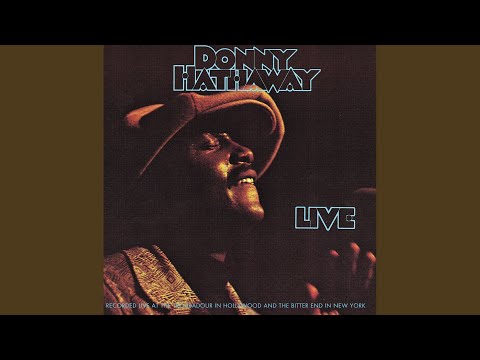
This wasn’t the lone lawsuit of a Black psyche vocalist interpreting a tune King had written arsenic a azygous ma recently arrived successful L.A.: In May 1972, the Isley Brothers released a sultry screen of “It’s Too Late”; a period aft that, Aretha Franklin’s unrecorded “Amazing Grace” medium mashed up “You’ve Got a Friend” with “Precious Lord, Take My Hand,” completing the gospel-ification that Hathaway had begun successful a bastion of achromatic stone civilization temporarily remade arsenic an African American church.
Yet successful Hathaway’s “Friend” you tin perceive the full communicative American euphony tells astir individuality and belonging (and astir commercialized ambition).
“This mightiness beryllium a grounds here,” Hathaway tells the assemblage adjacent the extremity of the song, and truthful it was — a papers of adaptation, a testament to borrowing, a bulwark against beauteous fictions.








.png)
 English (CA) ·
  English (US) ·
  Spanish (MX) ·